
4 reasons for climate optimism
Positive signs in a gloomy global outlook

Climate change activists are throwing soup at paintings and glueing themselves to basketball arenas. Newspaper articles talk about new climate catastrophes and how we’re not doing enough to slow down carbon emissions. Climate doomerism - believing that we’re doing too little to prevent catastrophic warming - is rampant.
But not every datapoint is so bleak: here are a few that make me hopeful.
We’ve hit the “steep part of the curve” for EVs and renewables
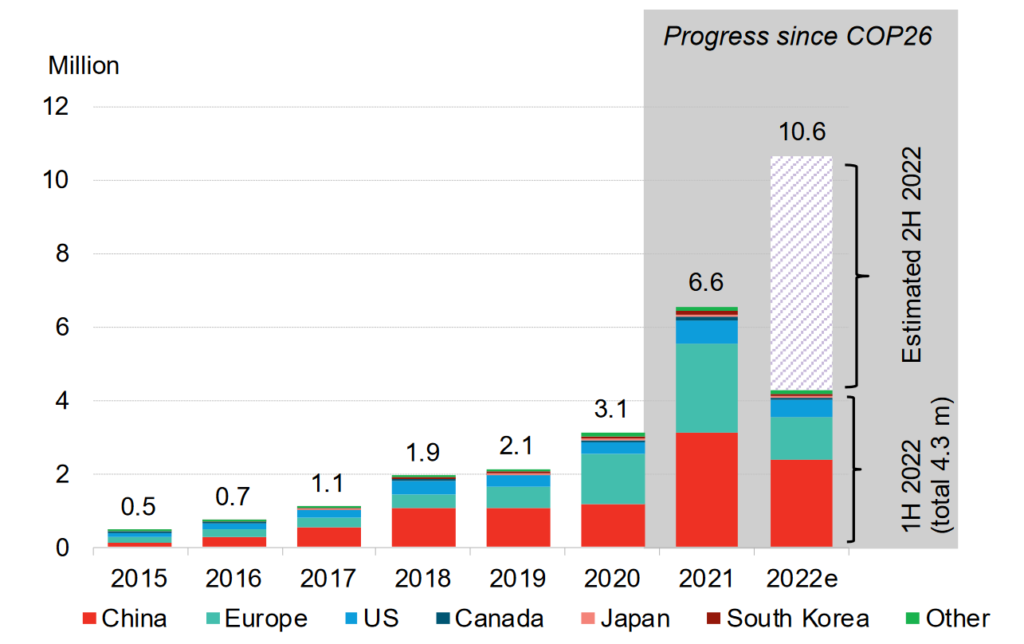
In the last 2 years, EV adoption has markedly accelerated. EVs now account for more than 10% of global car sales, up from 2.5% just 3 years ago. If we extrapolate this trend, it will be only a few years before EVs represent the substantial majority of new cars sold.
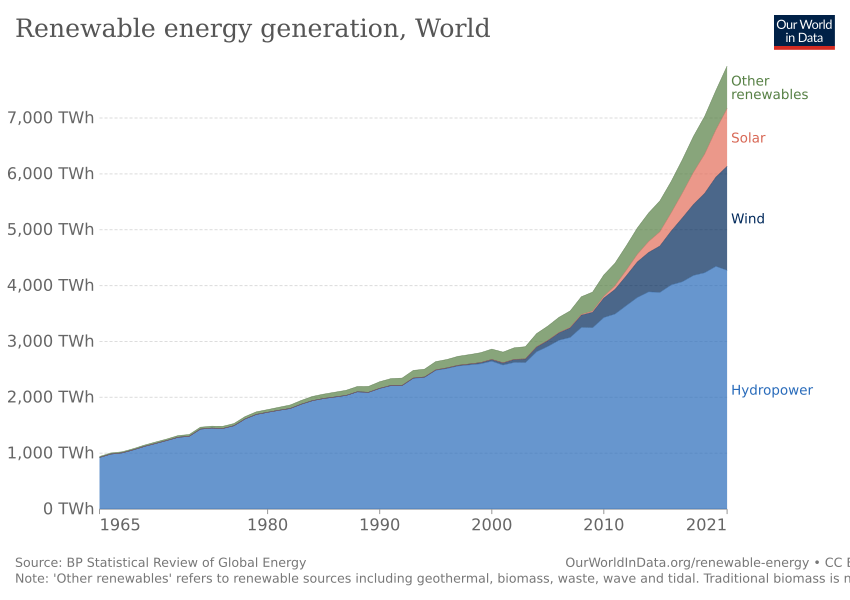
The curve for power produced by renewable sources has similarly inflected, driven by the rapid adoption of wind and solar. Solar in particular is exploding across the US and the world, driven by extremely cheap solar panels and a large and capable labor force of installers.
We’ve proved economic growth != emissions growth
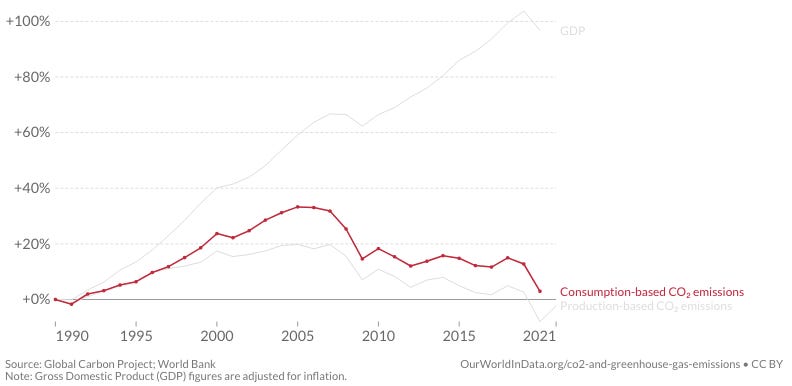
Over the last 15 years, total Co2 emissions are down meaningfully in the US and 31 other countries. During that same period, the US economy grew 63% (and other countries grew substantially as well). This decoupling shows economic growth is not predicated on burning more fossils fuels. 5 years from now, I expect many more countries to join the 32 that have already shown they can continue to grow and thrive without increasing emissions.
We’ve made renewables cheaper than fossil fuels
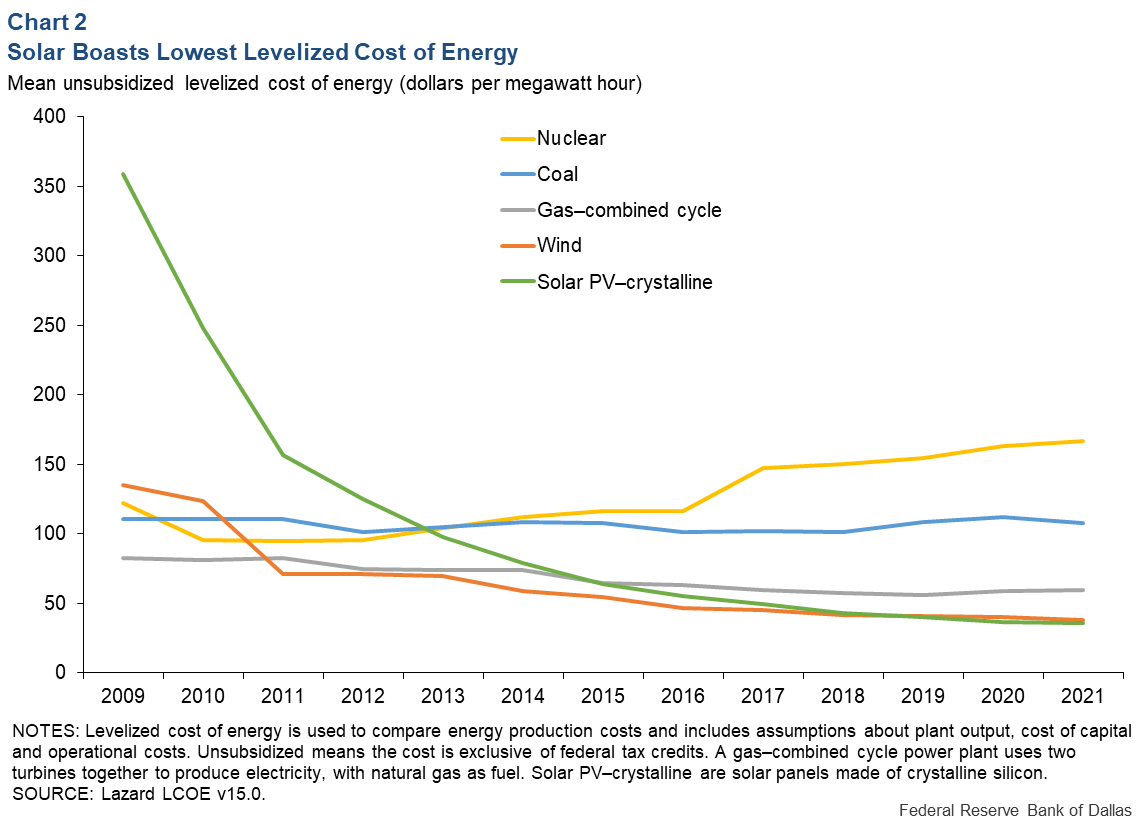
Wind and solar are now cheaper than coal and natural gas. Prices for wind, solar, and battery storage have fallen for the last 20 years, and continue to fall because of the magic of “learning curves”.
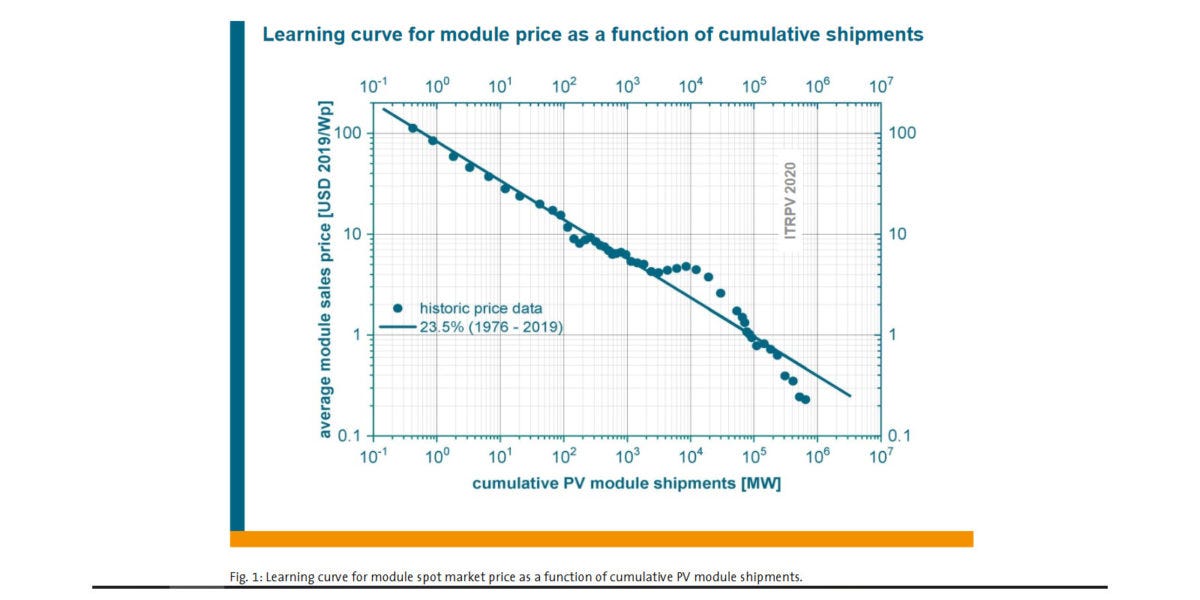
Learning curves refer to the tendency for prices to decline as a technology matures. This decline is driven by more R&D, learning by doing, and economies of scale.
You’ve probably experienced learning curves if you’ve bought a TV in the last few years - every year the quality of TV increases meaningfully, even as the cost comes down. Renewables have benefited from that same phenomenon, and likely will continue to for years.
Governments are announcing new policies and action
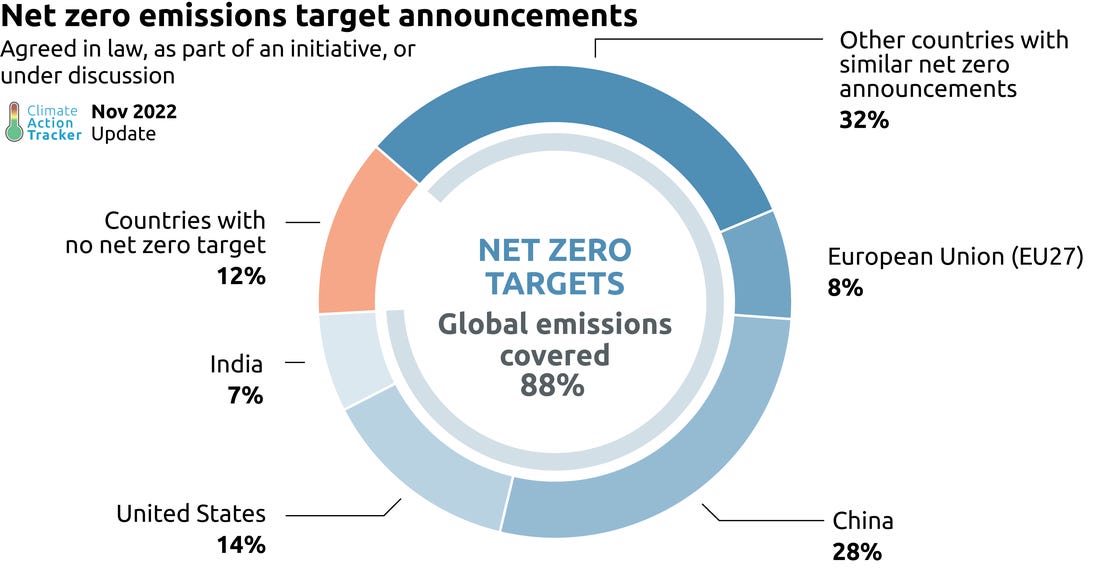
As of ‘22, 88% of global emissions were from countries with announced net zero targets. Just a few years ago that number was closer to 50%.
On top of that, we’re seeing individual states and companies opting in to the climate friendly path. That can look like Washington or Oregon banning gas hookups in new construction, or California mandating EV sales earlier than the US federal government, or Stripe and other leading companies seeding the market for carbon removal.
Governments also now realize the economic boon of harboring the companies that will empower the renewable revolution. The Middle East established its global economic importance on fossil fuels, and everyone from China to the EU to Canada wants to ensure that their economy contains some of the most important (climate) companies of tomorrow. This international competition will encourage investment across the spectrum.
So what’s next?
These trends point in the right direction. They show that some of the efforts we’ve made over the last few decades - whether to build better technologies or to encourage policy change - have had a real impact.
But they’re not the end. The curve of carbon emissions still ticks upwards. We need to build on these successes with even more. More governmental climate policy. Faster adoption of EVs, Heat Pumps, and renewable power generation. Increased R&D to tackle carbon capture and industrial decarbonization.
And if we do that? A year from now, we’ll have even more to be optimistic about.